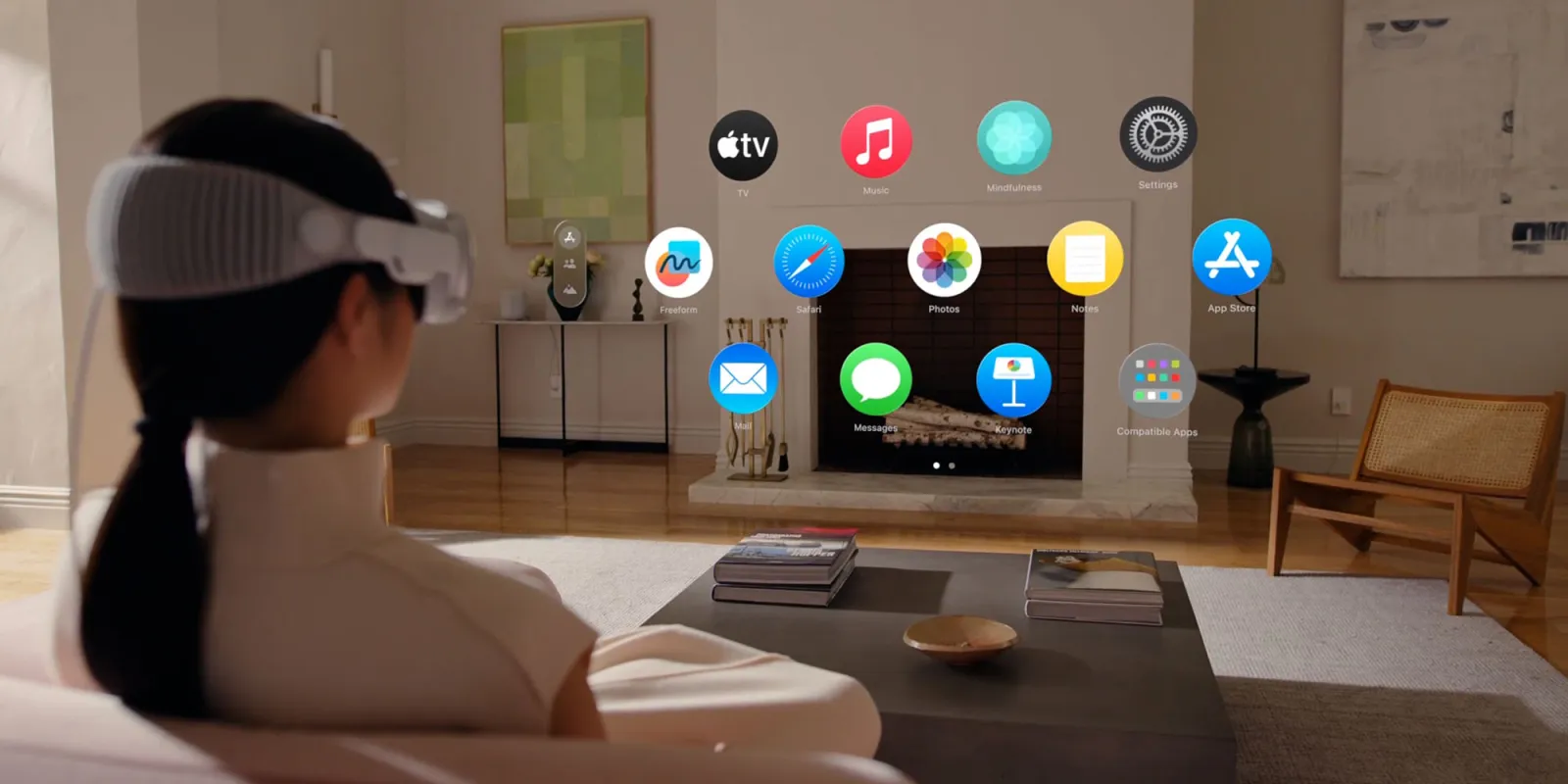
I tried Apple Vision Pro for the first time at an Apple Store. Apps floating in the air, a browser the size of a wall, spatial audio that put sound exactly where it should be. The fit and finish of the device, and the way your eyes just work as a cursor. It felt like a different category of headset from anything I’d tried before.
Then we got one at the office. I used it a handful of times and eventually stopped picking it up.
I’ve been here before
This wasn’t the first time that had happened.
I started building with ARKit when it launched on iOS in 2017. The idea that you could place a virtual object on a real surface and walk around it using nothing but an iPhone camera was genuinely impressive. I built tens of demos with it: Augmented Advertising, augmented analytics (video below), experiences for various events. Place a 3D model on a desk, crouch down to see underneath it, walk to the other side. People who tried it were impressed.
But once the novelty wore off there was no reason to open the app again. There wasn’t a task it solved. It was a trick.
A few years later a colleague and I were building in Unity for the Quest (video below). Oculus had the advantage of full immersion, which ARKit couldn’t do. Some of what you could build was extraordinary. Presence in VR is a real thing. Stand in a virtual space that’s well constructed and your brain partly buys it. I’ve been in demos where someone instinctively stepped back from a virtual ledge.
Same pattern. Wow for a while. Then back to whatever you were doing before.
The spreadsheet problem
There’s a theory about platform shifts in computing that’s held up pretty well. A new platform becomes a real platform when it gets its killer app. Not a good app. A necessary one.
VisiCalc, released in 1979, turned the Apple II from a hobbyist machine into something businesses had to own. People didn’t buy an Apple II and then discover VisiCalc. They bought an Apple II because of VisiCalc. The hardware became a VisiCalc accessory. Steve Jobs later said it drove Apple II sales more than any other single thing.
The camera did something similar for smartphones, though more gradually. The camera wasn’t a killer app in the VisiCalc sense, but the combination of camera plus always-on internet plus social platforms created entirely new behaviours that people built their days around. Once you were on Instagram, you noticed things differently when you were out. You started carrying your phone for its camera in a way you never carried your camera for its camera.
Both cases share something. The platform didn’t succeed because it was impressive. It succeeded because it became necessary for something people actually wanted to do.
What spatial computing has instead
The spatial computing use cases that actually work tend to fall into a few categories. Industrial training. Surgical rehearsal. Architectural walkthroughs. Remote maintenance guidance. These are real, and the ROI in some of them is clear enough that companies keep investing.
But these aren’t killer apps in the platform-defining sense. They’re valuable enterprise deployments in controlled settings. They don’t pull a platform into the mainstream. The person doing a VR safety training module at work isn’t going home thinking about what else they want to do in a headset.
Gaming came the closest. For a specific kind of person, VR gaming is compelling enough to justify the hardware. Beat Saber sold millions of copies. But gaming is consumption, not computation. It didn’t change what people needed a headset to do in the way VisiCalc changed what people needed a computer to do.
Why Vision Pro didn’t crack it
Apple’s instinct with Vision Pro was to solve the hardware problem so well that the software opportunity became obvious. In terms of hardware, they mostly delivered. The displays, the tracking, the passthrough quality, the interaction model were all genuinely ahead of anything else available.
But Vision Pro sits at a price that demands a real answer to why you’d reach for it over a laptop. For most things there isn’t one yet. Watching a film in it is extraordinary. But you’re not watching films for three hours a day. The large virtual monitor is maybe useful when you’re travelling without a screen, as I’ve seen people using these on their flight. The rest of the time your existing setup is faster and more comfortable.
SAP released SAP Analytics Cloud for Vision Pro in 2024, as part of a wave of enterprise software companies that invested in native Vision Pro apps. We used it in the Labs. Impressive in the right context. It didn’t change anyone’s daily setup.
Tim Cook noted early on that roughly half of Fortune 100 companies had purchased Vision Pro units. What he didn’t say was what those companies were actually doing with them after the pilot. The honest answer, in most cases, is probably not much yet.
The thing nobody can predict
The killer app for spatial computing probably won’t be obvious until someone builds it.
VisiCalc wasn’t a category anyone was asking for, but Dan Bricklin had an idea for making financial modelling easier and happened to build it for the platform that could run it. Nobody drew a roadmap that said “step three: interactive spreadsheet.”
Instagram wasn’t the camera app Apple imagined when they put a camera in the iPhone. Nobody at Apple planned for a photo-sharing social network to restructure how a billion people take photographs.
The equivalent for spatial computing might be something we’d struggle to describe today. It might use the form factor in a way that seems obvious only in retrospect. It might not even look like the demos Apple and Meta have been building.
I’ve been close to this technology for long enough to trust that the hardware isn’t the bottleneck anymore. The Vision Pro is an astonishing piece of engineering, Quest 3 is competent mixed reality at a price that makes pilots easy to justify. ARKit and the equivalent Android frameworks have been sitting in hundreds of millions of pockets for years. The technology is clearly ready, but unfortunately the idea that makes it necessary hasn’t arrived yet.